According to some stories, a mythical Daoist monk, Zhang Sanfeng from the Wudang Mountains, created Taijiquan. Some stories claim that a disciple of Zhang Sanfeng taught Taijiquan to the Chen family. The most verifiable version is that Taijiquan was developed sometime during the early part of the Qing Dynasty (1644 to 1912) by Chen Wangting (1600-1680).
From Chen Wangting to the present the history of Taijiquan is quite well documented although the details of some stories maybe questionable. How Chen Wangting came to develop Taijiquan is not very clear.
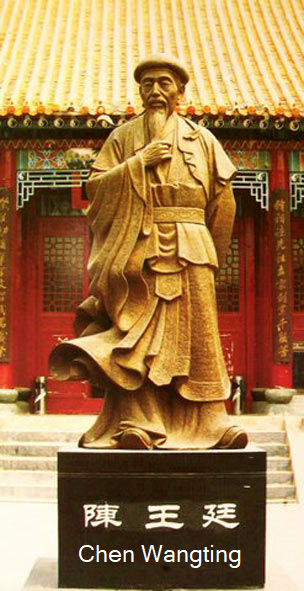
Chen Wangting set forth seven empty-hand forms as well as several weapons sets. At the time of Chen Wangting, the martial arts forms he established probably were not called Taijiquan. This name was given to the style some time later.
Chen Wangting is the ninth generation of the Chen family in Chenjiagou. and is considered the first generation of Chen Style Taijiquan.
Chen Changxing (1771–1853) was the 14th generation member of the Chen family and the 6th generation in the Chen Tanjiquan lineage. He was an influential member of the family. Some accounts attribute the consolidation of the seven empty-hand forms down to the two routines that we have today, that is yilu (pinyin: yīlù;一路) and erlu (pinyin: èrlù; 二路) that is first routine and second routine, to Chen Changxing. Erlu is often called cannon fist. Chen Changxing is the Chen family master that taught Yang Luchan the founder of the Yang Style Taijiquan. Yang was the first non-family student of the Chen family.
Chen Fake(pinyin Ché Fākē; 陳發科) (1887–1957), was the 17th generation of the Chen family. Chen Fake went to Beijing to teach the Chen family martial art. He is considered to be the main person to teach Chen Family Taijiquan outside the family. In Beijing, Chen Fake was challenged many times and won all his challenges. He became very well know. Two of Chen Fake’s sons, Chen Zhaoxu and Chen Zhaokui, his daughter, Chen Yu Xia, his nephew, Chen Zhaopei, and a number of disciples especially two prominent disciples, Hong Junsheng (pinyin: Hóng Jūnshēng ;洪均生)(1907-1996) and Feng Zhiqiang (pinyin: Féng Zhìqiáng; 冯志强)(1928–2012) are responsible for carrying on with the traditions of Chen Style Taijiquan.
According to some stories, a mythical Daoist monk, Zhang Sanfeng from the Wudang Mountains, created Taijiquan. Some stories claim that a disciple of Zhang Sanfeng taught Taijiquan to the Chen family. The most verifiable version is that Taijiquan was developed sometime during the early part of the Qing Dynasty (1644 to 1912) by Chen Wangting (1600-1680).
From Chen Wangting to the present the history of Taijiquan is quite well documented although the details of some stories maybe questionable. How Chen Wangting came to develop Taijiquan is not very clear.
A story with better documentation starts during the time of the fall of the Yuan Dynasty (1271-1368) (the Mongol dynasty) and the rise of the Ming Dynasty (1368-1644) (the last of the Han dynasties). There were parts of China that were ravaged by disease, bad weather, and military campaigns. In areas where there were holdouts loyal to the Yuan, Ming troops were sent to annihilate the resisters. In these areas the population was reduced to a small fraction of what existed prior to the fall of the Yuan. This included the area of Wen County in Henan Province.
Some areas of China maintained a large population. Shanxi Province was one area that still had a large population. In order to repopulate the decimated areas, a large government initiated forced migration was ordered. A gathering place was organized in Hongdong County, Shanxi Province. Traditionally migrants gathered under The Big Scholar Tree (pinyin: dà huái shù; 大槐树), sometimes refered to as the Big Banyon Tree or the Big Pagoda Tree. A man by the name of Chen Bu or Chen Pu (pinyin: Chén Bǔ ; 陈卜, Chén Pū ; 陈仆) was one of the people that were to migrate to Henan province. In 1372 Chen Bu gathered his family at the Big Scholar Tree and began the travel to a new home in Huaiqing Prefecture . There they established a town and named it Chenbuzhuang, after Chen. After a period of time they found that this site was not suitable so then in 1374, Chan Bu and his family moved to a nearby village called Changyang Village.
During that time, there were often bandits raiding villages and travellers. Chen found out that there were bandits hiding in the nearby hills that often would raid Changyang Village. Apparently Chen Bu was a skilled martial artist. Some suggest that his style was an external style. Chen Bu gathered the men in his family and others in the village and went out to eliminate the problem. After that there were no more problems with bandits in the area.
Villages and families often learned and developed martial skills to protect themselves even though they were farming villages. Starting with Chen Bu, the Chen family continued to train and pass along their martial art to succeeding generations. After some time so many people in the village that had the surname, Chen, that the village name was changed to Chenjiagou (pinyin: Chén jiā gōu; 陳家溝), that is, Chen Family Village.
Near the end of the Ming Dynasty (1368-1644), another Chen came into prominence. His name is Chen Wangting (pinyin: Chén Wángtíng; 陈王庭) (1600-1680 some sources say 1580-1660) and grew up learning the Chen family martial arts system. At that time, and throughout many centuries up through the end of the imperial period and into the republic period, most people were illiterate. Possibly only one person in a village or even in several nearby villages could read or write. Chen Wangting was one of the educated elite. He apparently took the local civil service examination as well as the provincial level examination. At some point he became a general in the Ming army in charge of the Wen County garrison. Some of the duties of the garrison were to insure safe travel for financial transactions and merchants. The belief is that he continued to gain martial arts knowledge with the army.
Domestic and international trade was very important. Merchants had become important parts of society and products were paid for with mostly copper coins and silver. Silver had become extremely important in China.
In addition to farming, which was the primary occupation of the Chen family, some had turned to armed escort service. Martial arts expertise was an important part of the Chen family’s tradition. How Chen family’s martial arts had evolved until Chen Wanting’s time is not certain. Many say that Chen Wangting developed taijiquan based on what he learned from his family’s tradition, what he learned from his time in the Army, and other sources. One of the other sources may have been a book written by famed Ming general, Qi Jiguang (1528 to 1588). Included in his writings are two books, one of which is Jixiao Xinshu (New Book on Military Efficiency). The 14th chapter, Quanjing Jieyao Pian (The Fist Canon and the Essentials of Nimbleness), covers unarmed combat which he considered as a form for basic training to strengthen troops, improve physical fitness, and build confidence. Qi included thirty-two stances to be used in hand-to-hand combat. Many of the stances are essentially what can be found in the taijiquan forms today.
When the Qing subdued the Ming, Chen Wanting lost his position in the Ming army. Some say that his life was in danger so he went into hiding. In any case the belief is that he returned to his home town of Chenjiagou.
Chen Wangting set forth seven empty-hand forms as well as several weapons sets. At the time of Chen Wangting, the martial arts forms he established probably were not called Taijiquan. This name was given to the style some time later.
A quote attributed to Chen Wangting not long before his death states:
In moments of listlessness I study martial arts. In times of activity I cultivate the land. In leisure I teach disciples and descendants so that they may be worthy of society.
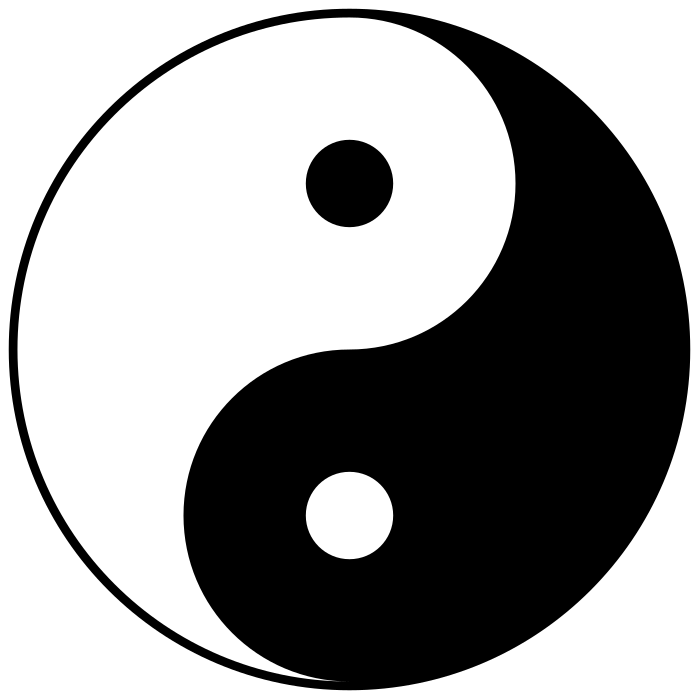
Chen Wangting based much of his thinking on Daoist philosophy. Especially important is the theory of Yin and Yang, the principle of the unity of opposites. He also included some of the theory of Traditional Chinese Medicine, TCM. In addition to the emply-hand forms and the weapons forms, he devised “Push Hands” (pinyin: tuī shǒu ; 推手). Push hands is a two person activity now used as a training tool, a method to test taijiquan techniques, and as a sport.
Chen Wangting is the ninth generation of the Chen family in Chenjiagou. and is considered the first generation of Chen Style Taijiquan.
Chen Changxing (1771–1853) was the 14th generation member of the Chen family and the 6th generation in the Chen Tanjiquan lineage. He was an influential member of the family. Some accounts attribute the consolidation of the seven empty-hand forms down to the two routines that we have today, that is yilu (pinyin: yīlù;一路) and erlu (pinyin: èrlù; 二路) that is first routine and second routine, to Chen Changxing. Erlu is often called cannon fist. Chen Changxing is the Chen family master that taught Yang Luchan the founder of the Yang Style Taijiquan. Yang was the first non-family student of the Chen family.
Some scholars suggest that the name, Taijiquan, was given to the martial arts style sometime around the middle of the 19th century. What it might have been called before that is unknown.
According to some accounts Chen Zhaopei (1893-1972), one of the representatives of the 18th generation of the Chen family was in the TCM pharmaceutical business and traveled extensively. While in Beijing he began teaching the Chen family martial art. In 1928 the Nanjing Martial Art Institute was established, and Chen Zhaopei was invited to teach there. His students did not want to stop their training so Chen Zhaopei invited his uncle, Chen Fake(pinyin Ché Fākē; 陳發科) (1887–1957), 17th generation of the Chen family, explaining that he was much better than him. So Chen Fake went to Beijing to teach the Chen family martial art. He is considered to be the main person to teach Chen Family Taijiquan outside the family. In Beijing, Chen Fake was challenged many times and won all his challenges. He became very well know. Two of Chen Fake’s sons, Chen Zhaoxu and Chen Zhaokui, his daughter, Chen Yu Xia, his nephew, Chen Zhaopei, and a number of disciples especially two prominent disciples, Hong Junsheng (pinyin: Hóng Jūnshēng ;洪均生)(1907-1996) and Feng Zhiqiang (pinyin: Féng Zhìqiáng; 冯志强)(1928–2012) are responsible for carrying on with the traditions of Chen Style Taijiquan.